2nd Training Block @ University of Innsbruck
Written by Pranesh Krishna
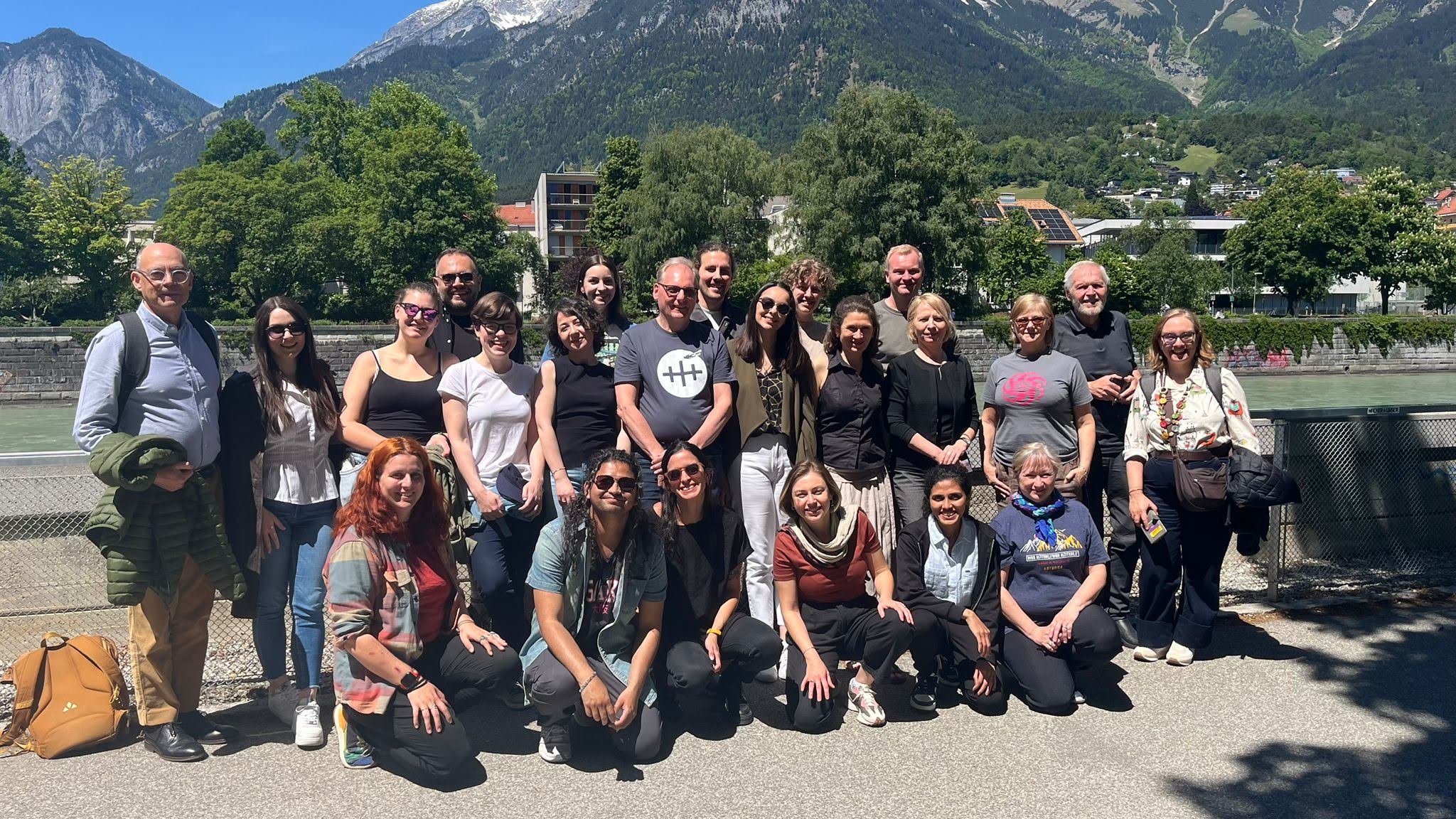
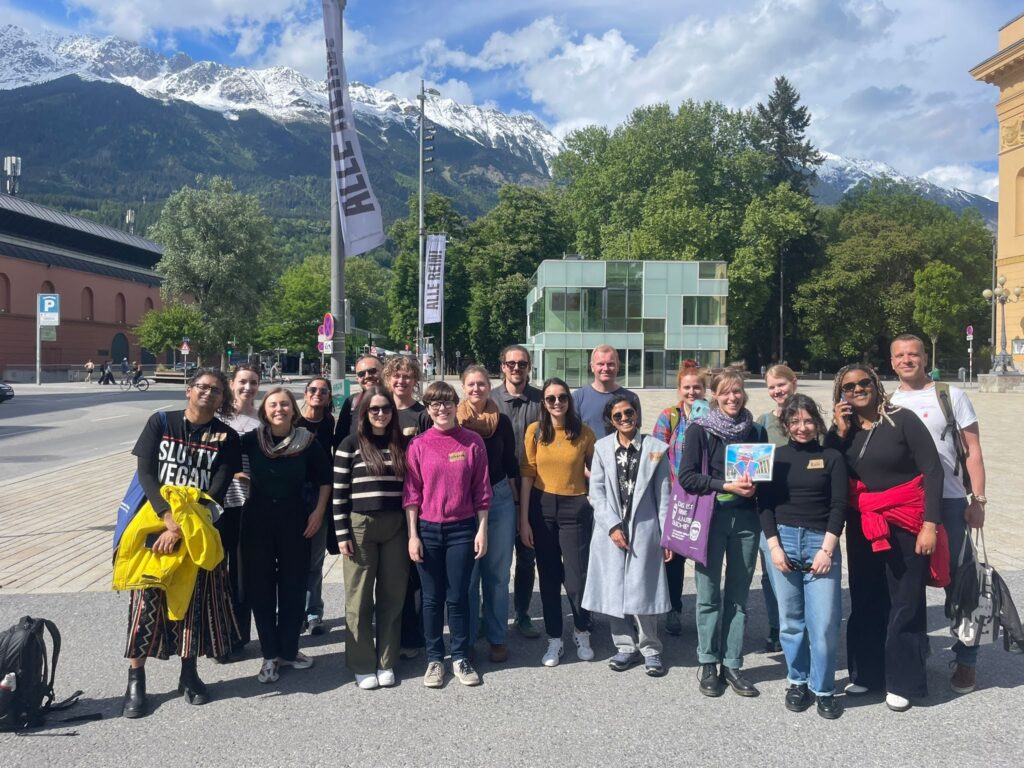
The COCOSO Industrial Doctoral Network organised the second training block for the doctoral candidates from 18th to 30th May 2026 at the University of Innsbruck, Austria. A series of sessions and workshops over the course of two weeks covered intersectionality in research, transferable skills for the social sector, research management, communication, and wellbeing.
The first week began with an introspection of the positionalities as industrial doctoral candidates and the blurring boundaries of academic and practice roles. The session facilitator led the doctoral candidates through the relational and emotional demands of doctoral work, including burnout and self-doubt, and toward the coping strategies and support structures already available to them. Following this, members from the Careleaver Association, Austria presented their self-advocacy work for young adults leaving the state care system. They emphasized moving beyond symbolic participation in research and genuine power-sharing with self-advocates. Acknowledging self-advocates’ participation through fair payments and recognizing them as experts were some of their recommendations for future co-constructed research. Attention towards marginalized voices continued in the form of a feminist tour of Innsbruck led by young Caritas, which traced sites connected to gender and other forms of marginalisation, alongside the initiatives addressing them. The network also held its formal launch during the week, presenting the project to university colleagues and external guests and offering an account of its first months of work, followed by an informal reception.
A mid-term meeting was also organised with Ms. Chiara Vallini from the European Research Executive Agency who serves as the project officer for the COCOSO Industrial Doctoral network. This full-day meeting gave an opportunity to the whole network, including the doctoral candidates, supervisors and committee members to report on progress, discuss challenges and collaborate on potential solutions.
Later in the week, a professor led an interactive session on power and vulnerability in research, drawing on the work of Judith Butler and Catherine Atkinson to examine how these can show up in participatory research, and in doctoral candidates’ own projects. A further session applied the same collaborative approach to a group literature review, with each doctoral candidate and Executive Committee member presenting a short summary of a chosen article on co-construction, participation, or co-design. The week concluded with an open Barcamp, a group-led discussion on topics decided by group consensus. Some of the topics discussed included artificial intelligence and ethics, and compensation for participants, challenges with doing research in your second language and community members involved in research.
The second week opened with a presentation from bidok, the largest online platform on disability rights, independent living, and inclusion in the German-speaking world. Bidok members led the session describing the organisation’s work and its digital library of accessible, open-access texts. This was followed by a hands-on workshop on communicating research, specifically translating research findings for diverse audiences and formats. A full-day session on career development mapped the range of pathways available to the industrial doctorate candidates and introduced a hybrid-careers framework emphasizing the value of cross-sectoral experience.
Attention then turned to research data management and FAIR principles with a workshop led by Digital Science Services (ZID), University of Innsbruck. A further workshop looked at how overlapping forms of disadvantage, such as gender, race, age, and disability, combine to shape a person’s situation in ways that looking at any one factor alone would miss. Doctoral candidates worked with practical tools, including a visual mapping exercise and a planning checklist, to help build this awareness into their research from the very start. The second week and the training block closed with a session on artificial intelligence and literature research. The session explained how current AI tools actually work, including why they sometimes produce confident but incorrect answers, before moving to hands-on practice with tools like ChatGPT, Google Gemini, and Perplexity, alongside research-specific tools such as Semantic Scholar and Research Rabbit.
Across both weeks, the training block sessions contributed to the understanding of ethical and relational demands of working with vulnerable groups, the practical skills needed to design, manage, and communicate research responsibly, and the doctoral candidates’ own development as researchers moving toward varied careers. The network carries these foundations to its next training block in Greece this November 2026 where they will be further strengthened.