Roundtable: Experts by experience speak about participation in French social welfare
Written by: Celia Consolini ; Photos: Courtesy of IdealCo and the roundtable participants.
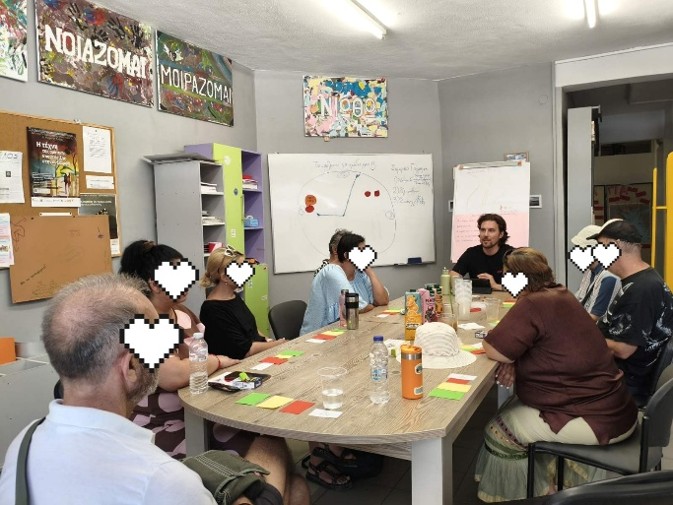
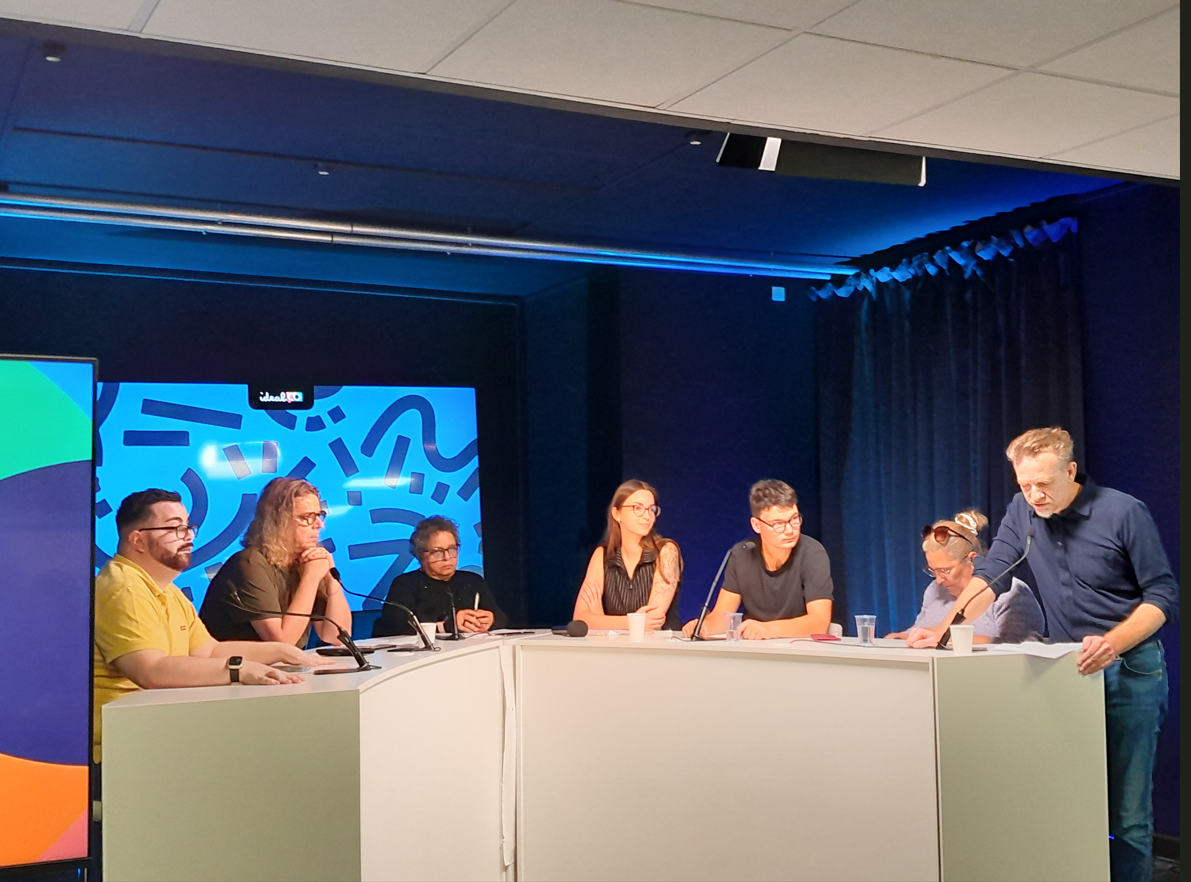
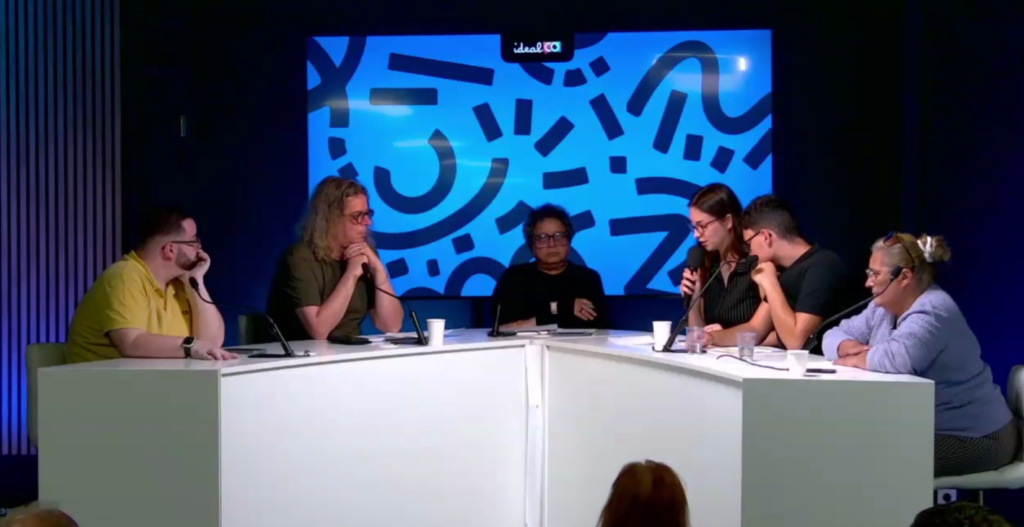
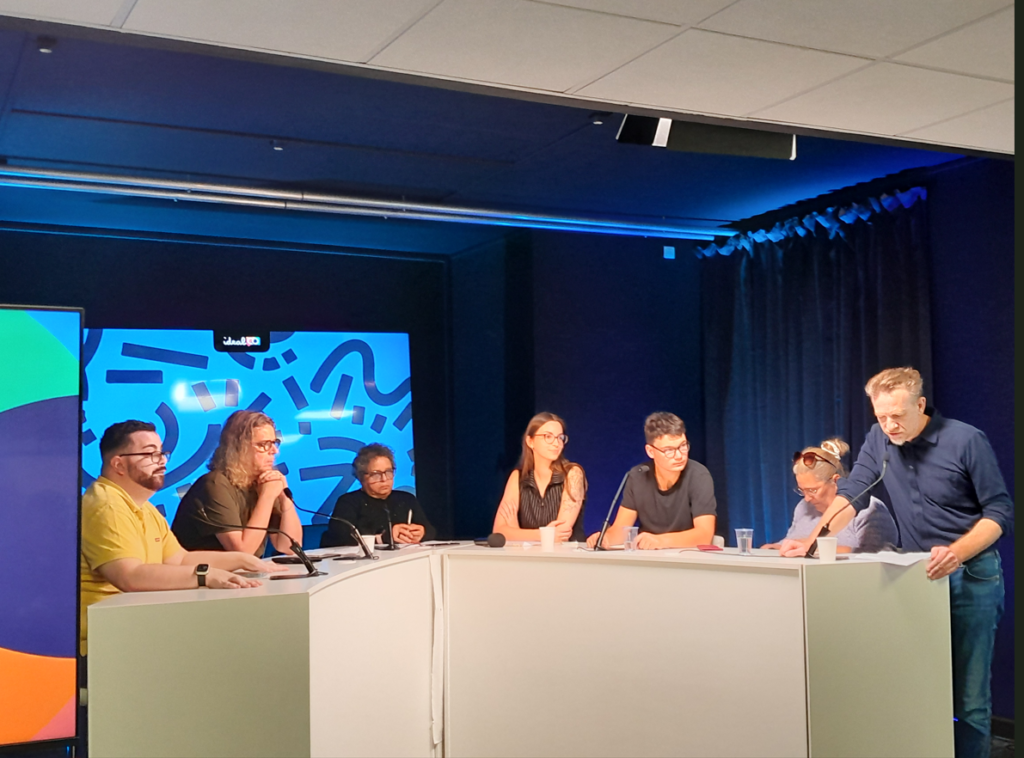
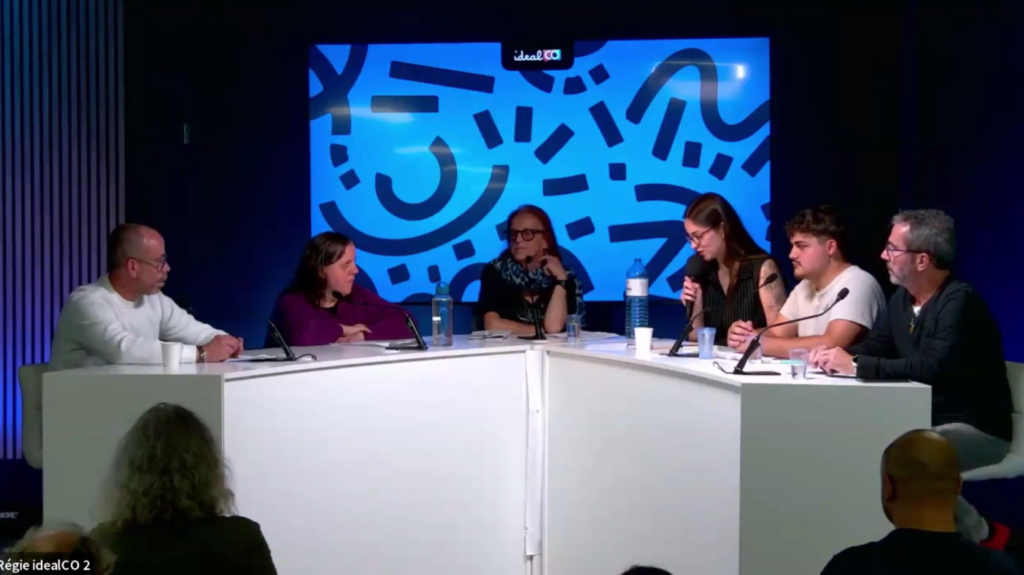
How are people with lived experience of social services involved in French social welfare? What works well, and what still needs to be improved to better co-construct policies and services? We explored these questions together with ten lived experience experts, at a roundtable organised by Célia Consolini (DC7) with Agence nouvelle des solidarités actives (ANSA), on October 14th.
Different channels of involvement
Around the table were citizens from across France, who are involved in national and local participatory committees on poverty, one-to-one peer advocacy work, local councils in disability, employment or child protection services, social workers’ training… They were at the event to share their experience and their analysis of participation: what it means, what it can look like, what works or doesn’t work, what they wish to be different.
The ten experts by experience who contributed were:
- Axel – Participatory committees for claimants of benefits for people currently not in work (Revenu de Solidarité Active) in Hérault
- Christelle – Local Committee of Social Work in the north of France (CLTSDS 59)
- Fatouma – National council for anti-poverty policies (CNLE)
- Florence – Regional council for people who are supported by social services (CRPA) in Centre Val de Loire
- Joris – Participatory Group for people with disabilities and in employment services (Emploi Accompagné) in Grand Est
- Maria – ATD Fourth World
- Morgan – Departmental youth council in child protection in Saone et Loire
- Olivier – National council for child protection (CNPE)
- Serge – National council for people who are supported by social services (CNPA)
- Sophie – Peer Advocate at Comité D-Base Drôme
Why participate?
At the core of participatory practices is the idea of epistemic justice and lived experience expertise. As Fatouma puts it: “To participate, is to give the opportunity of people who have experience of poverty to participate in life, like everyone else, and to give their opinion on policy. People who usually speak about poverty are authorities, professionals, ministers, members of parliament… But what do those people know about poverty? They don’t know anything. They hear about it, they read statistics, but they don’t know the reality of poverty.“
“Who can speak about poverty better than those who experience it?“ – Fatouma
However, simply inviting people to be in the room is not enough to ensure meaningful participation.
What are the conditions to ensure effective involvement?
Some of the conditions for effective involvement which were mentioned are: accessible language, supporting participants and having enough time to prepare meetings, skilled facilitation, including participation from beginning to end of projects, having follow-ups, taking care of people who participate, actively reaching out to and going to look for people who could participate, sensitivity around words used, paying for travels and lunches, providing training on public speaking and on the topics discussed during the groups.
Maria also described the importance of building a collective voice: “We need to prepare together in peer groups, to construct a collective voice. So that we don’t come with the individual ‘I’, but rather with ‘us’. This collective voice is important, voices have more weight when they are carried by not only one voice, but everyone’s voice.”
Olivier speaks about three core conditions: information (knowing your rights and what exists), participation (spaces and opportunities to voice opinions, make suggestions in daily life and not only institutionally), and consideration (for your voice to be heard and taken into account).
Does it change anything?
Changes happen at the individual level, for the person participating, as Joris explains: “You speak to people, you analyse, you learn and understand new things. It enriches us individually, too. There are no best memories, because my whole experience of participation has been only good memories.” Morgan also says: “I gained in confidence, I feel better, speak better. I met other young people like me, I am not alone in this situation.”
Changes in postures and prejudices are often mentioned, and this relational aspect is seen as very important. Maria says: “We hear professionals say that they have changed their daily practices, and they will try to speak to their managers about it. This is a very important part of the participatory training.”
This change in postures happens in both ways too. Maria shares her experience of co-training with local elected officials: “It changes opinions about people, ours towards professionals. Before, I though an elected official was someone sat in an office and doing nothing. Now I understand them better, they have responsibilities, they carry a lot too.”
Changes in policies and services is harder to see. Florence acknowledges the difficulty to see those changes: “We don’t necessarily see the decisions taken at the political level. We are listened to by the people in the room, but is what we say going to have an impact later? We don’t know.”
“A voice which is heard can still be quickly put away and not taken into consideration.” – Olivier
This also points to the responsibility of decision-makers, in very institutionalised forms of participation, to provide proper follow-ups and track changes, as Fatouma puts it: “In our meetings, we make suggestions on a broad range of current issues. At first, we never received answers. We asked and asked again, and now we do. For every proposal we send, some are accepted, we can see that we are really heard. And that encourages us to work even harder.”
Olivier observed that effects are much more seen at the local level, rather than at the national level: “At the local levels we can see change quite quickly; I’ve already seen evolutions and issues which were fixed after we raised them. At the national level however, we are confronted to political and economic limitations which are much bigger than us, and which prevent our voice to be fully considered, because other priorities prevail.”
Co-construction, not participation
Many spoke about the importance of sharing power, and to examine which decisions take lived experience into account and which do not. Axel shared a metaphor: “When looking at the projects we did and didn’t, we saw the glass half full, because some of them were carried to terms. But one of our members said: now, what’s important is to know what we put into the glass and who decides that.” This connects to criticisms around some participatory projects where many decisions are made without citizens, especially those setting the limits of what is discussed.
A strong emphasis was also put on the inclusion of practice knowledge alongside lived experience, like Olivier who said: “When we take a decision without one of the stakeholders, the decision is made against everybody. So, if there are no young people, or no professionals, it doesn’t work. We also need to step away from this ‘face to face’ and work alongside each other, collaborate.” In addition to working with professionals, this also means power imbalances have to be dealt with, to be able to work alongside each other.
(How) can participation be compensated?
A consensus arises: participation should not create extra expenses, so meals and transportation, and even childcare solutions need to be arranged. However, compensation is sometimes linked to negative consequences. Christelle says: “You can’t buy people’s voice. It’s not, ‘I give you money, so you don’t say anything against me’. People need to keep their freedom.”
There are also administrative barriers to financial compensation, and people who receive social benefits run the risk of losing them. Florence explains the importance of informed consent: “There was a council where they paid citizens who receive social benefits for meetings attendance and training, and they said that if people then lose their benefits it’s not the council’s responsibility because people had a choice not to participate. But for me, that’s not good participatory practice.”
Olivier also said: “I participated in a research as a co-researcher, and I was remunerated. Every time, people asked me, ‘so are you doing this because you are paid?’. And you say no once, twice, and after a fifth time you’re over it. I’ll give you the money back. I think it removes value to voice and commitment. On the other hand, at the national council for child protection we say we are the MPs for children, and the MPs are paid. So we ask ourselves, why aren’t we?”
Serge also points to this paradox: “Do you think decision-makers contribute for free? They don’t. If they weren’t paid to be in the room, we [people who use services] would be the only ones there! (…) We also say, the shoemaker is the one with the worse shoes [*literal translation of a French saying]. And that’s a reality. My flat costs me 53% of my budget. I’m left with 280€ to live. I advocate for good housing, against evictions, I learned about all the laws, I participate in many spaces… But today I’m still in the same awful situation.”
The group also recognised that there are many other ways they feel their involvement is valued. For instance, Sophie shares her experience as a peer worker: “There is a true recognition from stakeholders in social welfare. This is really important in our own healing journeys as well. To feel like we belong and that we can be useful.”
If you would like to listen to the full discussion, the replay of the roundtable is available in French through IdealCo: https://app.idealco.fr/formation-publique/la-participation-dans-laction-sociale-vue-par-les-personnes-concernees-benefices-et-limites-642209
You need to create an account; then you can access the video as a non-member with the code: RTANSA_2026